
It Seems Impossible: Throat Cancer Can Now Be Detected Using Your Voice! (Post #11)
Updated: Apr 7
Hi! Welcome back to the Spiramen Founder's Blog. In this week's double blog posts, we'll be looking at new discoveries related to head and neck cancer. Up first:
diagnosing throat cancer with Voice ID!
In recent years, with the emergence of AI, technology is playing a huge role in healthcare. For example, robots are increasingly being used to assist during surgeries. This advancement can also be seen in cancer diagnosis,
Today, we'll be discussing "Voice ID", how it works, and its potential to revolutionize cancer diagnostics.
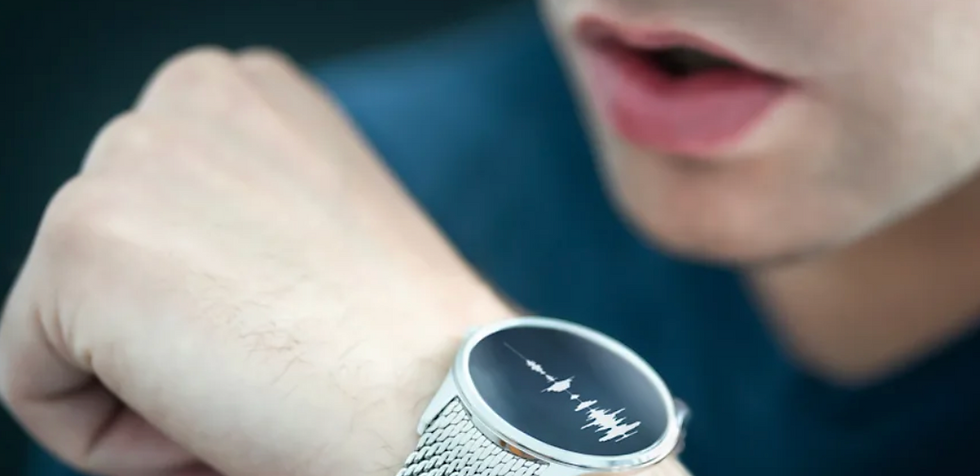
You may have seen a "Voice ID" notification pop up many times on your phone. For me, it always shows up when I'm doing Duolingo. This technology allows devices to register the characteristics of individual voices and recognize them. Some example characteristics are: pitch, tone, frequency distribution, and articulation patterns.
AI algorithms, with the help of these registered characteristics, are able to detect micro-irregularities in people's voices. These irregularities may be changed vocal fold vibration or airflow. Humans, unfortunately, are not able to hear or recognize these irregularities. However, the AI can recognize them and categorizes statistically consistent irregularities as "cancer signatures".
But what exactly are "cancer signatures" in the voice? They are noticeable irregularities that form due to the effects of throat cancer.
An example is when tumors form in throat cancer. Throat tissue changes. Tumors may cause airflow blockage, inflamation, or tissue stiffness. These alter the vibration of a person's vocal chords. In turn, this affects airflow, which then affects the sound production consistency. Another "cancer signature" is change in speech timing and coordination. This is due to a degrade in neuromuscular control of the patient, they're not able to control their speech well. This may result in slurred speech. These things together create a profile unique to people with throat cancer, so AI is able to detect it.
But why can't we hear what a device can? This is because we hear sound holistically. We are not able to single out the pitch, tone, articulation, etc. of a person's voice in the same way a device, with the aid of AI, can.
AI can also get more accurate when diagnosing.Before being used. it is trained with datasets: the voices of some healthy patients vs. the voices of confirmed cancer patients. As the model is trained more, its accuracy increases!
But you might be wondering, what device is this that has the potential to so easily diagnose someone? Most of you already own it! You can do a diagnosis test easily via an app on your smartphone. Diagnosis takes only around 5 minutes, and results are usually just as fast.
A few universities and app developers have already started using their versions of this diagnostic too. Some examples are one created by Dr. Law at Emory University and an Apple App Store version called VoiceScreen+.
This technology shows huge potential for the future, where anyone can et diagnosed in a matter of minutes, with only their phone! However, for now, ensure that you visit your doctor promptly if you would like a diagnosis. This technology is relatively new, so getting help from a certified professional is your best option!
While this is the situation currently, this technology is still extremely impressive! A few decades ago, no one would have thought this technology to be possible. Through this tool and other new innovations, cancer diagnosis becomes easier, cheaper, and more convenient. At Spiramen, that is a huge part of our goal!
This week we have a double blog post. My next blog post is on its way!
Information Citations:
Zhang, Yuchen, et al. “AI-Based Voice Analysis for Early Detection of Laryngeal Cancer.” Computers in Biology and Medicine, vol. 146, 2022, 105561. https://doi.org/10.1016/j.compbiomed.2022.105561
He, Liang, et al. “Acoustic Analysis for Pathological Voice Detection: A Review.” IEEE Access, vol. 7, 2019, pp. 151320–151332. https://doi.org/10.1109/ACCESS.2019.2947714
Sonde Health. “Voice AI for Health Monitoring.” Sonde Health, https://www.sondehealth.com
Vocalis Health. “Voice-Based AI Biomarkers.” Vocalis Health, https://vocalishealth.com
MIT Technology Review. “AI Is Learning to Diagnose Illness by Listening to Your Voice.” MIT Technology Review, https://www.technologyreview.com
IEEE. “AI and Voice Biomarkers in Healthcare.” IEEE Spectrum, https://spectrum.ieee.org
Image Citations:
Frontiersin.org. AI Could Soon Detect Early Voice Box Cancer from the Sound of Your Voice, www.frontiersin.org/news/2025/08/12/frontiers-digital-health-diagnostic-acoustics-distinguish-vocal-fold-lesions. Accessed 5 Apr. 2026.
Comments